Mastering system design- high level design
High Level System Design
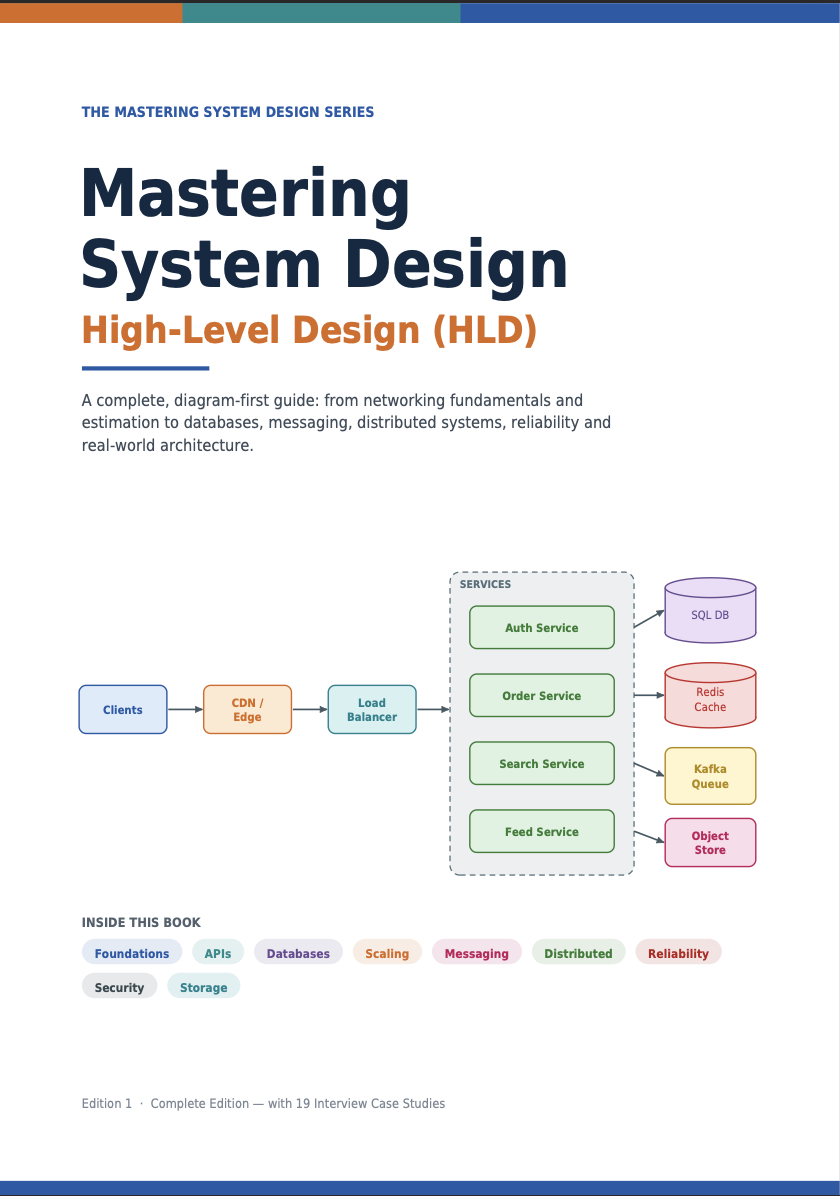
Learn High-Level Design with a 45-minute interview playbook, core distributed-system building blocks, and 19 production-style case studies covering APIs, databases, caching, Kafka, scaling, failure handling and trade-offs.
Price: ₹299 ₹599 · Digital PDF ebook · instant access after purchase
Topics covered
- Redis
- Kafka
- Load Balancer
19 case studies
- URL Shortener – Short-code generation, read-heavy architecture, Redis caching, redirect latency, click analytics, expiry and multi-region design.
- WhatsApp / Messaging – WebSockets, session registry, message ordering, offline delivery, fan-out, idempotency, presence and encrypted media flows.
- Uber / Ride-Hailing – Driver location ingestion, geo indexes, dispatch, atomic assignment, trip state machine, ETA, surge and payment flow.
- Instagram – Upload pipeline, CDN, object storage, feed generation, fan-out, caching, likes/comments, celebrity users and search.
- YouTube – Chunked upload, transcoding, metadata, object storage, adaptive streaming, CDN distribution and recommendation events.
- Netflix / Video Streaming – Playback APIs, catalog, recommendation, encoding ladders, CDN strategy, regional resiliency and massive read traffic.
- Twitter / X – Tweet storage, home timeline, fan-out-on-write vs read, celebrity handling, cache hierarchy, search and trending events.
- Dropbox – Chunking, deduplication, metadata, sync conflicts, uploads, versioning, object storage and desktop/mobile consistency.
- Google Drive + Docs – File metadata, permissions, sync, document collaboration, versioning, real-time updates and scalable blob delivery.
- Ticket Booking / BookMyShow – Seat holds, TTL, transactions, locking, payment saga, hot-show traffic, waiting rooms and idempotent confirmation.
- Food Delivery – Restaurant discovery, cart, order lifecycle, delivery-partner assignment, live tracking, payments and notifications.
- Notification System – Priority queues, provider routing, retries, dedupe, scheduling, frequency caps, fallback channels and bulk campaigns.
- Distributed Rate Limiter – Token bucket, sliding windows, Redis atomicity, sharding, dynamic rules, burst handling and fail-open/fail-closed choices.
- News Feed – Fan-out strategies, ranking, cache layers, pagination, celebrity users, freshness and asynchronous feed materialization.
- Distributed Job Scheduler – Scheduling, worker leases, retries, idempotency, partitioning, failure recovery, cron semantics and execution history.
- Search Autocomplete – Trie/FST indexes, top-K precomputation, hot prefixes, cache hierarchy, offline rebuilds, trends and personalization.
- Web Crawler – URL frontier, politeness, dedupe, Bloom filters, retries, robots rules, spider-trap defense and recrawl scheduling.
- Payment System – Payment state machines, idempotency, ledger entries, webhook reliability, PSP routing, reconciliation and security.
- E-commerce Platform – Catalog, search, cart, inventory reservation, checkout saga, flash-sale controls, seller flows, fulfillment and tracking.